
Flexo Press Buying Guide | Speed, Run Length & Drive System Selection
Investing in a new flexographic printing press is likely the largest capital expenditure your factory will make this decade. The stakes are high: Choose the right machine, and you unlock new markets. Choose the wrong one, and you are stuck with expensive downtime or quality limitations for the next 15 years.
We often see buyers fixate on a single number: Max Speed. While "400m/min" looks good on a brochure, it tells you very little about profitability.
At Newtop Machine, we advise our clients to look at the "Triangle of Selection": Substrate Accuracy, Run Length Efficiency, and Drive System Stability. This guide will help you match the machine configuration to your specific business model.
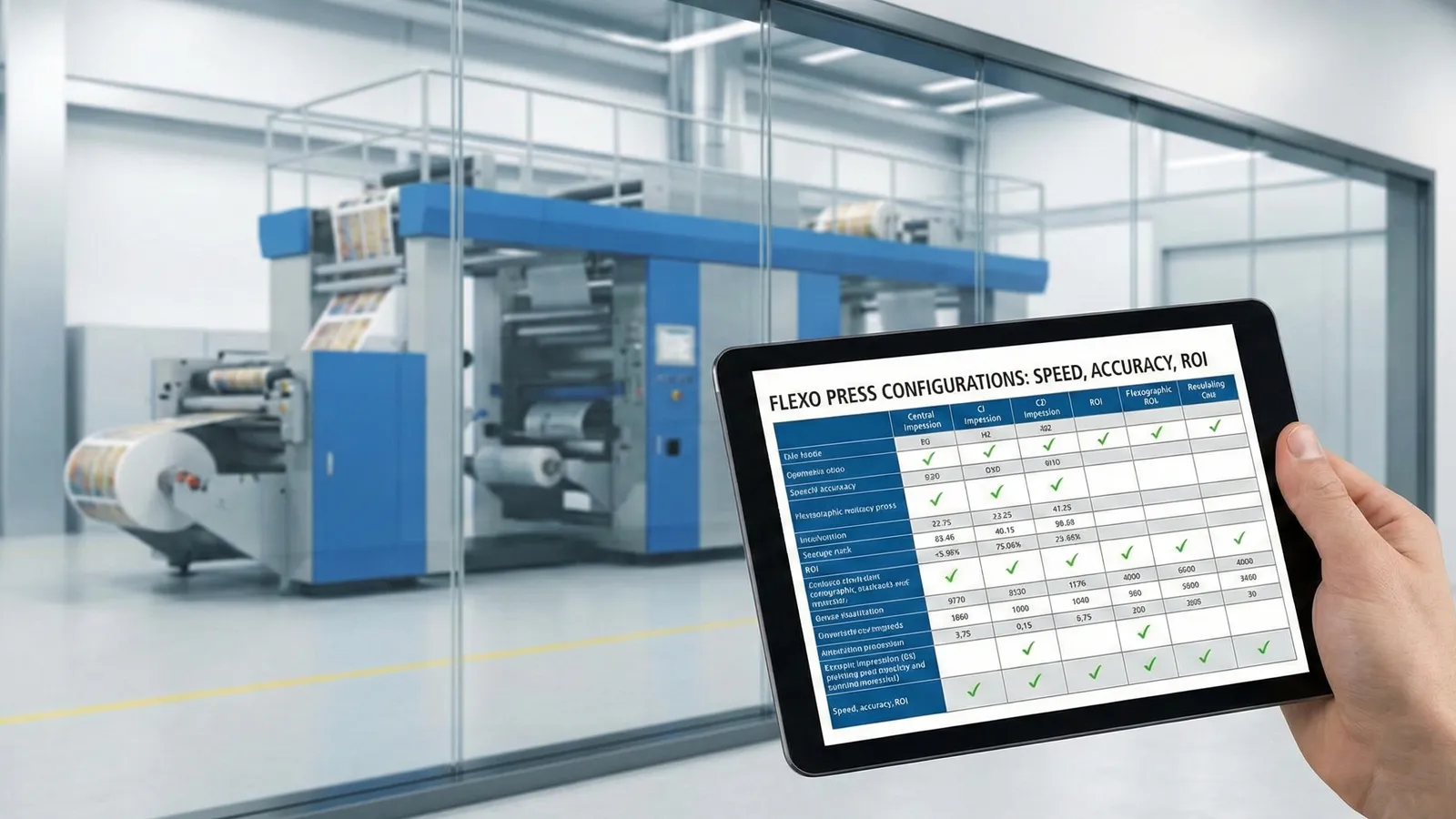
1. The Substrate Dictates the Structure
Before discussing motors, look at what you are printing.
- Stretchy Materials (LDPE, BOPP, Shrink Films): You need a Central Impression (CI) Press. The large central drum locks the material in place, preventing it from stretching between colors. A Stack Type press simply cannot hold register on thin films at high speeds.
- Stable Materials (Paper, Heavy Cardboard): You have more flexibility. While a CI press offers better quality, a high-end Stack Press or Unit Type Press can be a cost-effective alternative if you don't need to hold tight tolerances on stretchy films.
2. Run Length: The "Hidden" Efficiency Killer
This is where the "Sleeve Technology" decision happens. Ask yourself: How many times do I change jobs per shift?
Scenario A: The "Long Run" Factory
If you print 100,000 meters of the same milk carton or cement sack design without stopping, Changeover Time matters less. You can opt for a standard cylinder system. The setup takes longer, but once it's running, it's efficient.
Scenario B: The "Short Run" Factory
If you print 5,000 meters of "Brand A" labels, then switch to "Brand B," you might change jobs 5-8 times a day.
In this case, a machine running at 400m/min is useless if it takes 2 hours to change plates. You need a machine equipped with Sleeve Technology and Auto-Registration.
The Math: Saving 30 minutes per changeover x 5 jobs = 2.5 hours of extra production per day.
3. Drive System Selection: Mechanical vs. Servo
This is the biggest price differentiator. Should you pay the premium for "Gearless" (Servo)?
Mechanical Drive (Gear):
Great for budget-conscious buyers printing standard packaging (shopping bags, burger wrappers). It is robust and easy to repair. However, gears wear over time, eventually causing "gear marks" (banding) that high-end brands will reject.
Servo Drive (Gearless):
Required for high-end flexible packaging (snacks, pet food, medical). The independent motors provide perfect tension control and allow for "Infinite Print Repeat" lengths.
Deep Dive: Engineering The Perfect Register
Understanding how different mechanical structures and drive systems influence long-term print stability is critical when selecting a press. This is explained in detail in our technical guide, CI Flexo vs Gearless Flexo: Structural and Drive System Differences Explained, which breaks down the engineering differences behind both technologies.
4. Total Cost of Ownership (TCO)
The purchase price is just the entry fee. Consider the operational costs over 5 years:
- Energy Efficiency: Look for drying systems with "Air Recirculation." Heating air is expensive; reusing it saves money.
- Material Waste: How many meters of expensive film do you waste setting up a job? A Servo machine with "Pre-Register" memory can set up in 20 meters. A manual mechanical press might waste 200 meters.
- Maintenance: Gears need oil changes and greasing. Servo motors are virtually maintenance-free.
5. Newtop’s Selection Framework
To simplify your decision, use this quick reference:
| If your priority is... | We Recommend... |
|---|---|
| Low Budget / Simple Paper Bags / Long Runs | Stack Type Flexo (Mechanical) |
| Budget-Friendly / Film & Paper / Medium Runs | Standard CI Flexo (Belt/Gear) |
| Top Quality / Thin Film / Frequent Job Changes | Gearless CI Flexo (Full Servo) |
Conclusion
The "Best" machine is the one that fits your P&L (Profit and Loss) statement. Don't overspend on technology you don't need, but don't underspend and limit your future growth.
Still unsure which configuration fits your product mix? Send us your sample designs and production targets. Our engineers will configure a machine proposal that balances performance with ROI.