
Custom Unit Type Flexo Machines | Tailored for Labels & Packaging
The "Catalog" Trap
We often receive inquiries that simply say: "Send me a price for a 6-color 350mm flexo machine."
Our engineers hate these emails. Why? Because a 6-color machine built for printing medical labels is useless for printing burger wrappers, even if the width and speed look identical on paper.
At Newtop Machinery, we don't believe in "off-the-shelf" solutions for industrial production. A Flexo Printing Machine is the heart of your factory; it must be tailored to your specific blood type—your material, your ink, and your finishing needs. Here is how we customize our Unit Type platforms to solve specific industry pain points.
1. The "Invisible" Customization: It's Not Just About Width
Most buyers focus on visible specs: Printing Width (350mm/450mm) and Colors (6/8/10). But the real engineering happens inside the machine.
Case Study: The Heat Problem
A standard Unit Type press uses Hot Air dryers. This works fine for paper. But if you are printing Shrink Sleeves (PVC/PET), hot air will distort the film, causing the "smile" defect where the label curves.
How We Customize: For film clients, we rip out the standard air path and install Water-Cooled Chilled Rollers on every print station. We switch the drying from Hot Air to LED UV, which cures ink instantly without emitting infrared heat. You can't see this on a basic price list, but it's the difference between a sellable label and a melted mess.
2. Tailoring the Tension Zone (The "Nerve System")
Paper is forgiving; it can handle a bit of tugging. Foil and thin film are not.
Industry A: Logistics Labels (Paper)
We configure the machine with a simpler, cost-effective magnetic powder brake system. It’s robust, cheap to maintain, and perfect for 80gsm paper.
Industry B: In-Mold Labels (IML) & Unsupported Film
Magnetic brakes are too "jerky" for 12-micron film. For these clients, we replace the entire tension system with Dual-Servo Infeed and Outfeed motors controlled by a floating dancer roll. This creates a "Zero-Tension" zone where the film floats through the print units without stretching.
3. Configuration Logic: Building Your Workflow
The Unit Type structure is like Lego. We don't just give you 6 print units; we build a workflow.
- For Wine Label Printers: We insert a Hot Stamping Unit and a Flatbed Die-Cutter inline. This allows for the intricate embossing and texturing required by premium brands, which rotary dies struggle to achieve.
- For Coupon/Booklet Makers: We add a Cross-Over Turn Bar and a Delam/Relam module. This allows printing on the adhesive side, neutralizing the adhesive, and creating multi-layer peel-and-reveal labels in one pass.
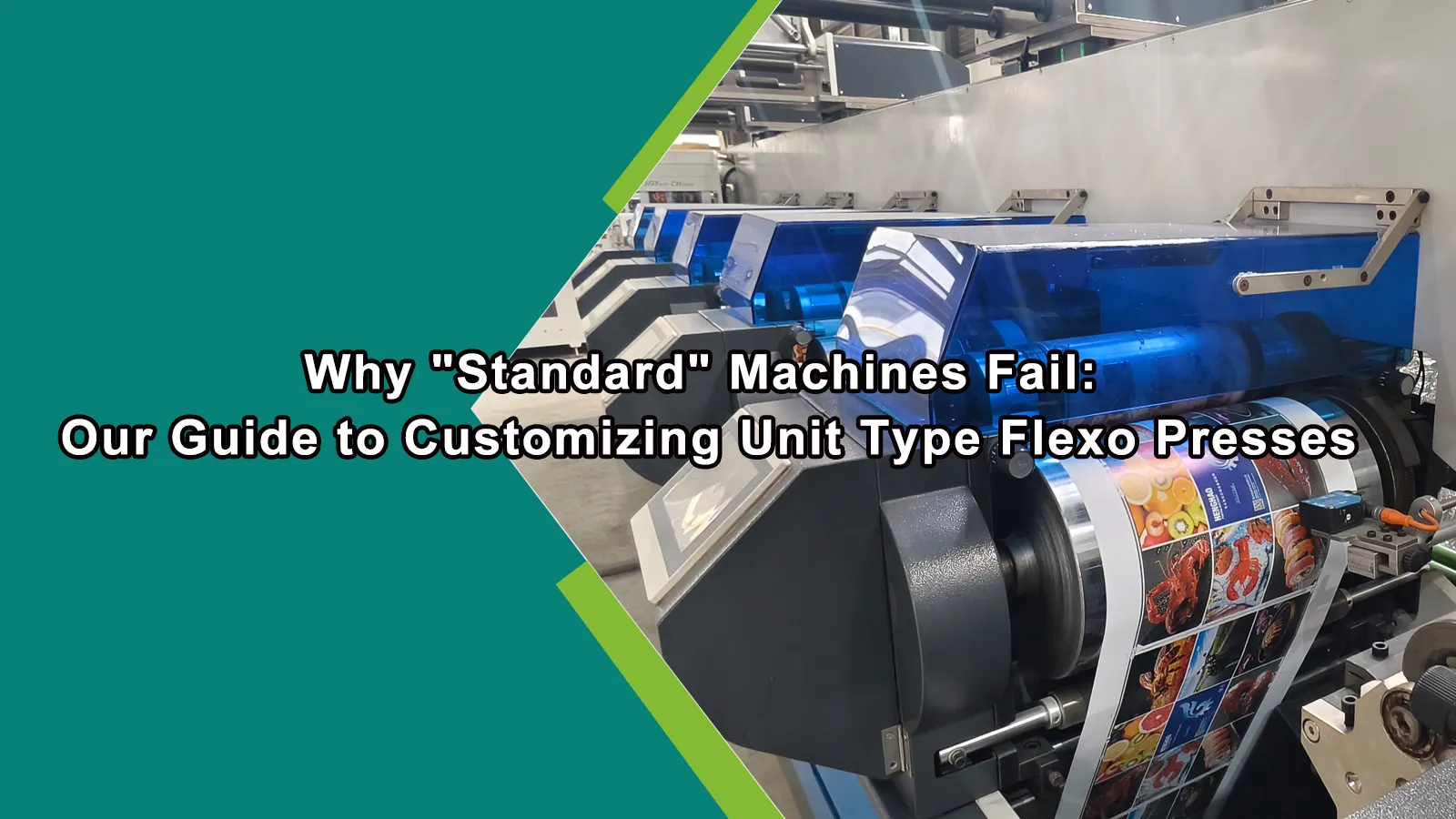
4. Our Engineering Process: "Show Me the Sample"
We refuse to quote based on a guess. Our customization process starts with your product.
- Sample Analysis: You send us the physical substrate and the target artwork.
- Stress Testing: We run your material on our test bench to determine the "Breaking Point"—the maximum tension and heat it can withstand.
- Blueprint Design: We draw a custom web path. If your ink coverage is 300% (heavy solids), we extend the web path between print units to allow for longer drying time.
Conclusion: Customization is an Investment, Not a Cost
Yes, a custom-configured machine might cost 10-15% more than a stock machine sitting in a warehouse. But that stock machine will cost you 50% in efficiency losses every single day you run it.
Don't force your production to fit the machine. Build the machine to fit your production. Contact Newtop Machinery today to get a custom engineering proposal and see a video of a machine running your specific application.