
Importing Machinery from China: A Logistics & Risk Management Guide
Signing the purchase agreement is only the first half of the transaction. The second half—getting a 3-to-8-ton machine from our factory floor to your facility across the ocean—is where the real complexity lies.
We have seen excellent machinery projects face unnecessary delays because of a missed ISF filing or a misunderstood shipping term. Logistics is not just about transportation; it is about Risk Management.
Drawing from our experience exporting to over 50 countries, this guide outlines the safest strategies for shipping, insurance, and customs clearance when importing heavy industrial equipment.
1. Incoterms: Who Controls the Shipment?
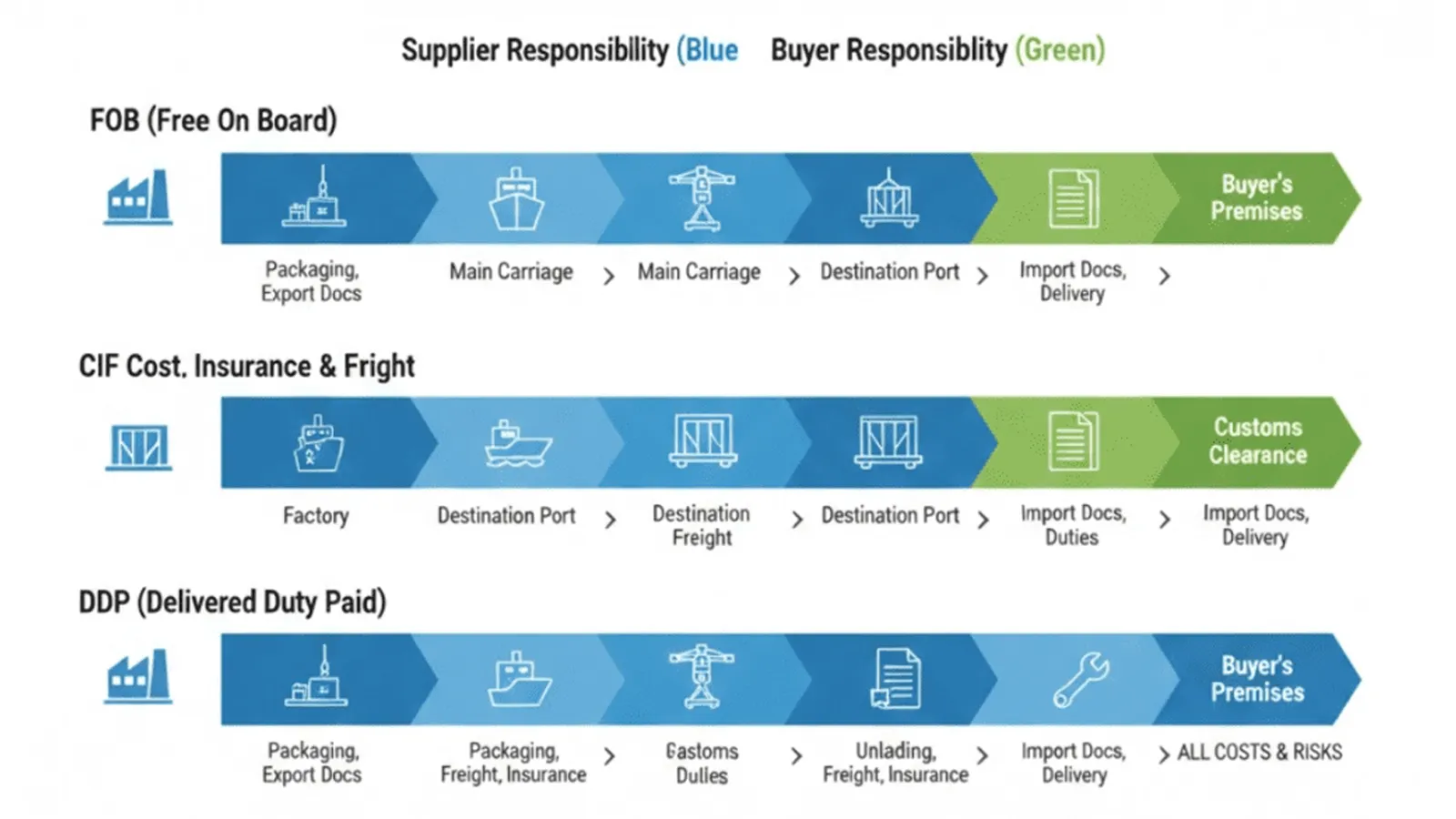
The Incoterm you select determines your total landed cost and liability. While there are many options, we generally narrow it down to two recommendations based on your experience level:
For Experienced Importers: FOB (Free on Board)
If you have a trusted freight forwarder and import regularly, we recommend FOB. We deliver the machine to the Chinese port and handle export customs. You take control from there. This gives you the power to negotiate ocean freight rates directly and control the routing.
For First-Time Buyers: DDP (Delivered Duty Paid)
If this is your first time importing heavy machinery, we strongly advise DDP. In this scenario, we handle everything—freight, insurance, import duties, and trucking—right to your door.
Why? We have seen buyers choose CIF (Cost, Insurance, Freight) to save money, only to be hit with unexpected "Destination Terminal Handling Charges" that cost more than the freight itself. DDP removes these surprises. The price you pay is the final price.
2. The "0.5% Insurance Policy": Pre-Shipment Inspection
A veteran distributor once said: "The product is paid for before it leaves the dock. You are responsible for the product even before it is yours."
Once the machine is crated and loaded onto a ship, your leverage disappears. That is why we encourage Pre-Shipment Inspection.
- When to Inspect: Ideally when production is 80% complete. This allows us to make final adjustments to the PLC or mechanical stroke before crating.
- What We Test: We run your specific mold with your specific foil thickness. We verify the coil feeder alignment, the stacker mechanism, and the electrical voltage compatibility.
- The Cost: Third-party inspection typically costs less than $300. On a $55,000 machine, that is 0.5% of the purchase price to ensure you don't receive the wrong spec. It is the cheapest insurance you can buy.
3. Ocean Freight & Packaging Protection
Aluminium foil container machines are heavy (3-8 tons) and sensitive to corrosion. Standard "wood crate" packing is not enough for a 40-day ocean voyage.
Our Packaging Standard:
We insist on vacuum-sealing the machine with moisture barriers and desiccant packs inside the crate. Without this, saltwater moisture can cause rust on the precision die pillars before the machine even arrives.
Container Planning:
Most single machines fit in a 20ft or 40ft container. However, if you are buying a complete line with a large auto-stacker, we may need to discuss Open-Top Containers. Be aware that "Out of Gauge" (OOG) shipments carry surcharges of $250-$500, which we will factor into your freight quote.
4. Insurance: The "General Average" Risk
Many buyers assume the freight forwarder's basic liability coverage is enough. It is not.
There is a maritime law called General Average. If a ship captain has to jettison cargo to save the vessel during a storm, all cargo owners on that ship must share the financial loss proportionally. Even if your machine is safe, you could owe thousands of dollars.
Our Advice: Always purchase independent All-Risk Marine Cargo Insurance. The premium is tiny (approx. 0.08% - 0.3% of cargo value). For a $50,000 machine, paying ~$150 to cover theft, damage, and General Average is a non-negotiable safety step.
5. Customs & Documentation Checklist
Documentation errors cause 22% of shipping delays. To clear customs smoothly, ensure your broker has these documents 7 days before the ship arrives:
- Commercial Invoice & Packing List: Must match the physical cargo exactly.
- Bill of Lading (BoL): The title to the goods.
- HS Code Classification: Using the wrong code can lead to duty overpayment or fines. We provide the correct 6-digit HS code for "Aluminium Foil Container Machines" to ensure accurate tariff calculation.
- ISF Filing (USA Only): Must be filed 24 hours before the ship leaves China. Late filing triggers a $5,000 fine.
Summary: Preparation Prevents Delays
Importing machinery is a standardized process, provided you follow the rules.
- Choose DDP if you are new; FOB if you are experienced.
- Never skip the Pre-Shipment Inspection / Test Run video.
- Buy All-Risk Insurance to cover maritime mishaps.
- Hire a local Customs Broker to handle the paperwork.
At Newtop Machine, we don't just build the equipment; we assist with the logistics to ensure it arrives at your factory ready to run.
Have questions about shipping rates to your country?
Contact our logistics team for a current freight estimate and a sample CIF/DDP quotation.