
Silicone Mats vs Aluminum Foil | Heat, Safety & Cost Comparison
Open any home baker's drawer, and you will likely find two essentials: a roll of Aluminum Foil and a Silicone Baking Mat (like a Silpat).
They seem to do the same job—lining a pan to prevent sticking—but physically, they are opposites. One is a metal conductor; the other is a silicone insulator.
As experts in aluminum material science, Newtop Machine is here to settle the debate. We will break down the differences in heat transfer, safety, and convenience to help you decide which one to reach for.
1. The Core Difference: Conductor vs. Insulator
The biggest difference isn't price; it's how they handle heat.
Aluminum Foil (The Conductor)
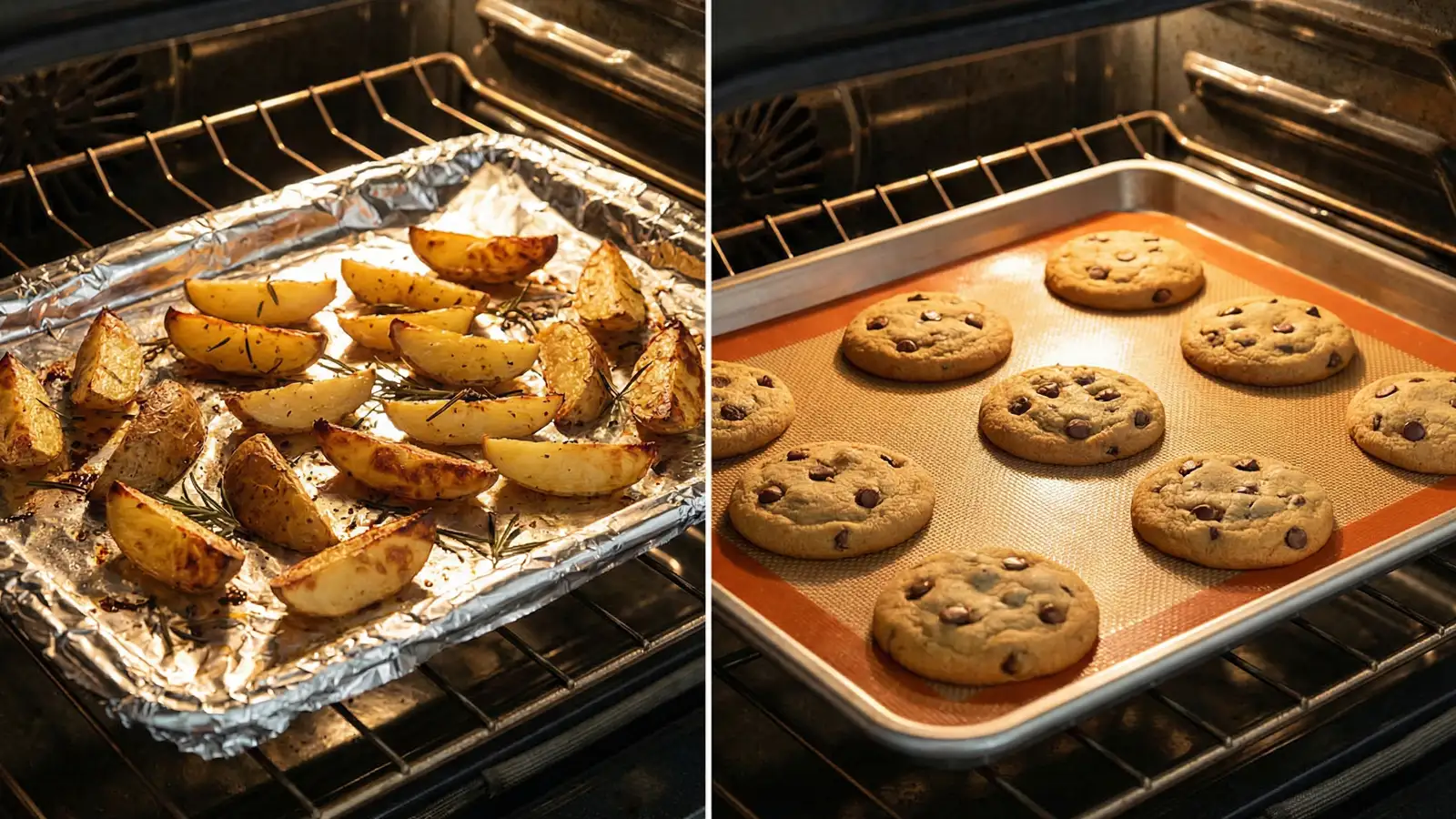
Aluminum is a metal. It conducts heat incredibly efficiently. When you put food on foil, the heat from the oven pan transfers directly into the food.
Result: Crispy bottoms, faster browning, and caramelization. Perfect for roasted potatoes or pizza.
Silicone Mat (The Insulator)
Silicone mats are made of fiberglass mesh coated in food-grade silicone. They act as a barrier between the hot metal pan and your food.
Result: Gentle, even heating. It prevents the bottoms of cookies from burning before the centers are cooked.
2. Head-to-Head Comparison
| Feature | Aluminum Foil | Silicone Mat |
|---|---|---|
| Max Temp | 1,220°F (High Heat / Broiler) | 480°F (Standard Baking) |
| Texture | Crispy & Browned | Soft & Even |
| Cleanup | Zero (Toss it) | Must Wash (Grease stays) |
| Versatility | Baking, Wrapping, Grilling | Baking Only (Flat) |
3. Safety Check: Leaching and Limits
Are Silicone Mats Safe?
Yes, provided you stay under 480°F. If you exceed this temperature (like under a broiler), the silicone can break down and release fumes. Never cut a silicone mat, as this exposes the fiberglass mesh inside, which can contaminate food.
Is Aluminum Foil Safe?
Yes, for 99% of cooking. As mentioned in our Foil Pan Safety Guide, the only risk comes from cooking highly acidic foods (tomato, lemon) for long periods, which can cause trace aluminum leaching.
4. When to Use Which? (The Cheat Sheet)
Reach for Aluminum Foil When:
- Roasting Vegetables: You want that high-heat conduction to create crispy edges on broccoli or potatoes.
- Broiling: Silicone melts under a broiler; foil handles the intense direct heat easily.
- Messy Proteins: Cooking bacon or fish? Fold the foil edges up to catch the grease, then throw it away. Washing bacon grease off a silicone mat is a nightmare.
- Wrapping Food: You can mold foil around a sandwich or leftover chicken; silicone mats are floppy and flat.
Reach for a Silicone Mat When:
- Baking Cookies: If your oven has "hot spots" that burn cookie bottoms, the silicone mat will insulate them for a perfect golden finish.
- Candy Making: Nothing sticks to silicone. Hot caramel or melted chocolate peels right off.
- Kneading Dough: It acts as a non-slip surface on your countertop.
FAQ: Common Questions
Can I use foil in an Air Fryer?
Yes. Just ensure it is weighed down by food so it doesn't fly into the heating element. Never block the airflow completely.
Why does food stick to my foil?
Foil is not naturally non-stick (unless you buy the "non-stick" coated variety). You must brush it with oil. Silicone mats are naturally non-stick.
Which is more eco-friendly?
Silicone wins on reuse (2,000+ times). However, aluminum foil is recyclable if cleaned. If you bake daily, silicone reduces landfill waste.
Summary
If you want convenience and crispiness, Aluminum Foil is the winner.
If you want eco-friendly non-stick baking, the Silicone Mat is the winner.
Most professional kitchens use both. Aluminum foil remains the most versatile tool for high-heat cooking and packaging—which is why the global demand for aluminum foil products continues to rise.