
Flexo Machine Guide | Best Press for Film, Labels & Paper
In the world of flexographic printing, "One Size Fits All" is a myth that destroys profit margins.
A machine configured to print heavy Kraft paper sacks at 400m/min will fail miserably if you try to run 12-micron PET film on it. The tension systems, drying methods, and mechanical structures required are fundamentally different.
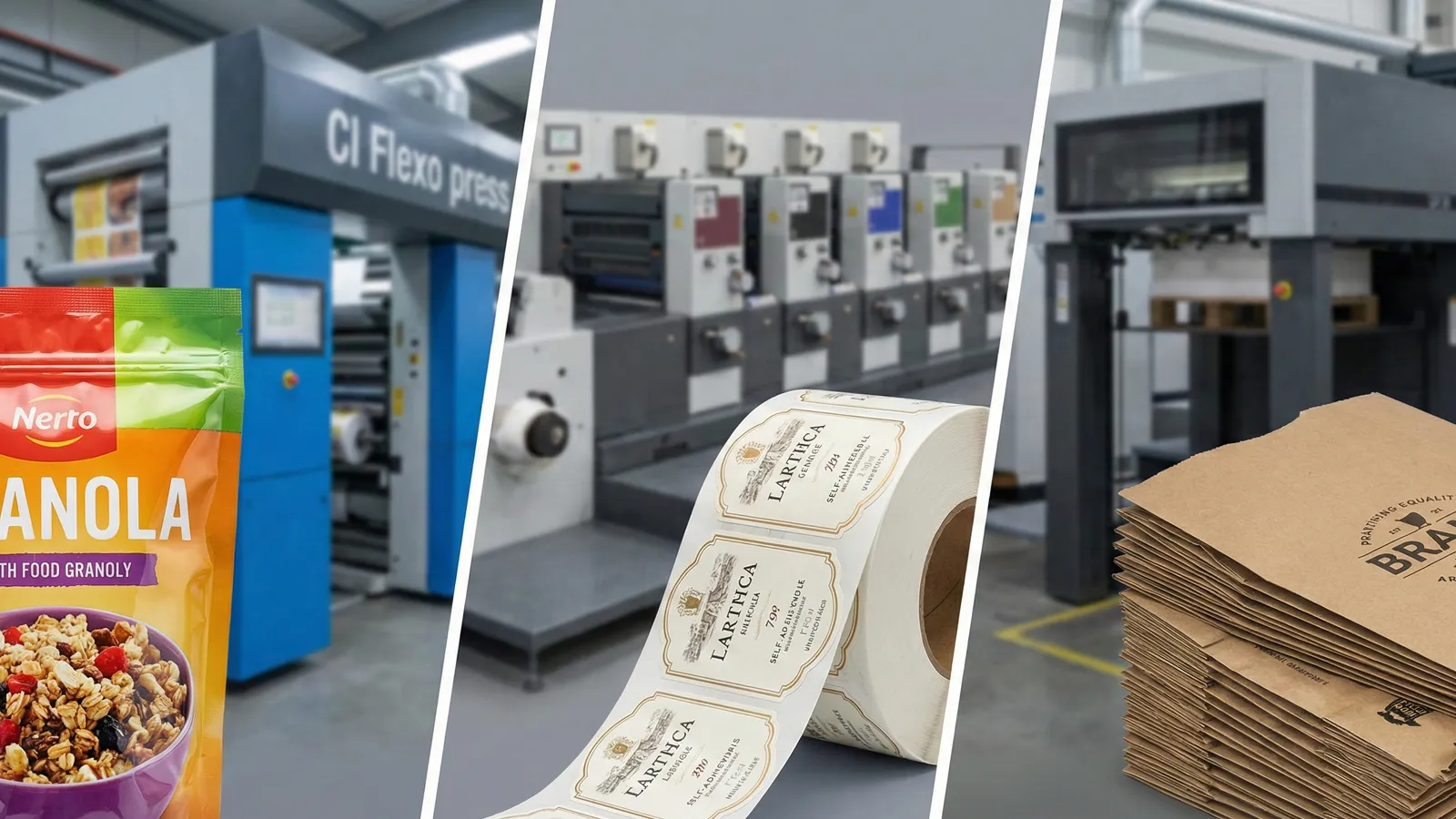
For manufacturers expanding their product lines, selecting the right machine configuration is critical. In this guide, Newtop Machine categorizes the optimal press setups for the three biggest sectors: Flexible Packaging, Labels, and Paper Products.
1. Flexible Packaging (Thin Films)
Substrates: LDPE, BOPP, PET, BOPA, Shrink Sleeves.
The Challenge: Heat sensitivity and stretching. Thin films easily deform under tension or high drying temperatures, leading to registration errors.
The Recommended Configuration: Central Impression (CI)
For flexible packaging, the CI (Central Impression) Press is the undisputed king.
- Why: The large central drum supports the web through the entire printing process. The material is "locked" against the drum surface, preventing it from stretching between color stations.
-
Essential Features:
- Closed-Loop Tension Control: You need a system that can handle low-tension values (measured in Newtons) without snapping the web.
- Chilled Drums: After the drying tunnel, the film must be cooled immediately to prevent shrinking.
2. Labels & Narrow Web
Substrates: Self-Adhesive Paper, PP/PE Label Stock, Light Carton.
The Challenge: Complex finishing. Labels often require die-cutting, cold foil, lamination, and varnishing in a single pass.
The Recommended Configuration: Inline / Modular Press
While CI presses can print labels, an Inline (Unit Type) Press offers superior modularity for this sector.
- Why: Inline presses allow you to add "Value-Added Stations" easily. You can insert a rotary die-cutter, a screen printing unit, or a cold foil unit anywhere along the line.
-
Essential Features:
- UV Drying System: Labels require instant curing for high-gloss finishes and chemical resistance.
- Short Web Path: Minimizes waste during setup, which is crucial for expensive label stock.
3. Paper Products (Sacks, Cups, Bags)
Substrates: Kraft Paper, Cup Stock, Cardboard.
The Challenge: Absorption and Dust. Paper absorbs water-based ink rapidly and generates dust that can clog delicate machinery.
The Recommended Configuration: Stack Type or CI Press
For paper, the choice depends on print quality requirements.
- For Industrial Sacks/Shopping Bags/ Paper Cups: A Stack Type Press is often sufficient and cost-effective. Paper is dimensionally stable and holds register well without a central drum.
- For Liquid Packaging (Milk/Juice Cartons): A CI Press is required to achieve the high-definition graphics brands demand.
-
Essential Features:
- High-Capacity IR/Hot Air Dryers: Paper requires significant thermal energy to evaporate the water content in the ink.
- Web Cleaners: Essential to remove paper dust before it reaches the printing plates.
4. Machine Structure by Application
Choosing between a Stack, Inline, or CI press is not just about the layout; it is about the Drive Precision required for your specific job.
Different substrates place very different demands on press structure and drive precision. For a detailed comparison of how CI and gearless flexo designs perform across various production environments, refer to CI Flexo vs Gearless Flexo: Structural and Drive System Differences Explained.
5. Long Run vs. Short Run Considerations
Finally, your average order size dictates the technology level.
- Short Run (Many Job Changes): You must invest in Sleeve Technology (Cantilever design). The ability to change print cylinders in minutes is the only way to stay profitable when running 5,000-meter orders.
- Long Run (Dedicated Production): Standard cylinder systems are acceptable. If the machine runs the same "Coca-Cola Red" label for 3 weeks, setup time becomes negligible.
Summary
There is no "Best Flexo Machine"—only the best machine for your product.
- Film = CI Press (Stability).
- Labels = Inline Press (Modularity).
- Paper = Stack or CI (Drying Power).
Planning a new production line? Consult with Newtop Engineering. Share your substrate details and target products, and we will configure the optimal press for your factory.