
Can Aluminum Foil Burn? The Truth About Melting Points and Kitchen Safety
Whether you are a home cook wrapping a potato or a catering business owner stocking up on supplies, a common safety question often arises: Can aluminum foil burn?
The short answer is: No, aluminum foil does not burn in standard kitchen conditions.
However, there is a big difference between "burning" and "melting." As manufacturers of aluminum foil container machines, Newtop Machine understands the metallurgy behind the material. In this guide, we break down the physics of heat resistance and answer the critical question: what temp does aluminium melt?
1. Melting vs. Burning: The Science
To understand why foil is so safe, we must look at the numbers.
- Paper Ignites at: 233°C (451°F)
- Cooking Oil Smokes at: ~200°C - 250°C (400°F - 480°F)
- Aluminum Foil Melts at: 660°C (1,220°F)
- Aluminum Foil Ignites at: 1,220°C (2,228°F)
So, what temp does aluminium melt? It turns into liquid at 660°C. But to actually "burn" (combust with flames), it needs to reach over 1,200°C.
The Invisible Shield:
Why is it so hard to burn? Aluminum naturally forms a thin layer of Aluminum Oxide when exposed to air. This invisible skin acts as a fire retardant, blocking oxygen from reaching the metal underneath. Even at high heat, this layer protects the structural integrity of the container.
2. Does Tin Foil Catch on Fire in the Kitchen?
While we technically use "aluminum foil" today, many people still ask: does tin foil catch on fire? (Tin foil is an old term; actual tin fell out of use post-WWII).
Here is how foil behaves in different appliances:
In the Oven (Safe)
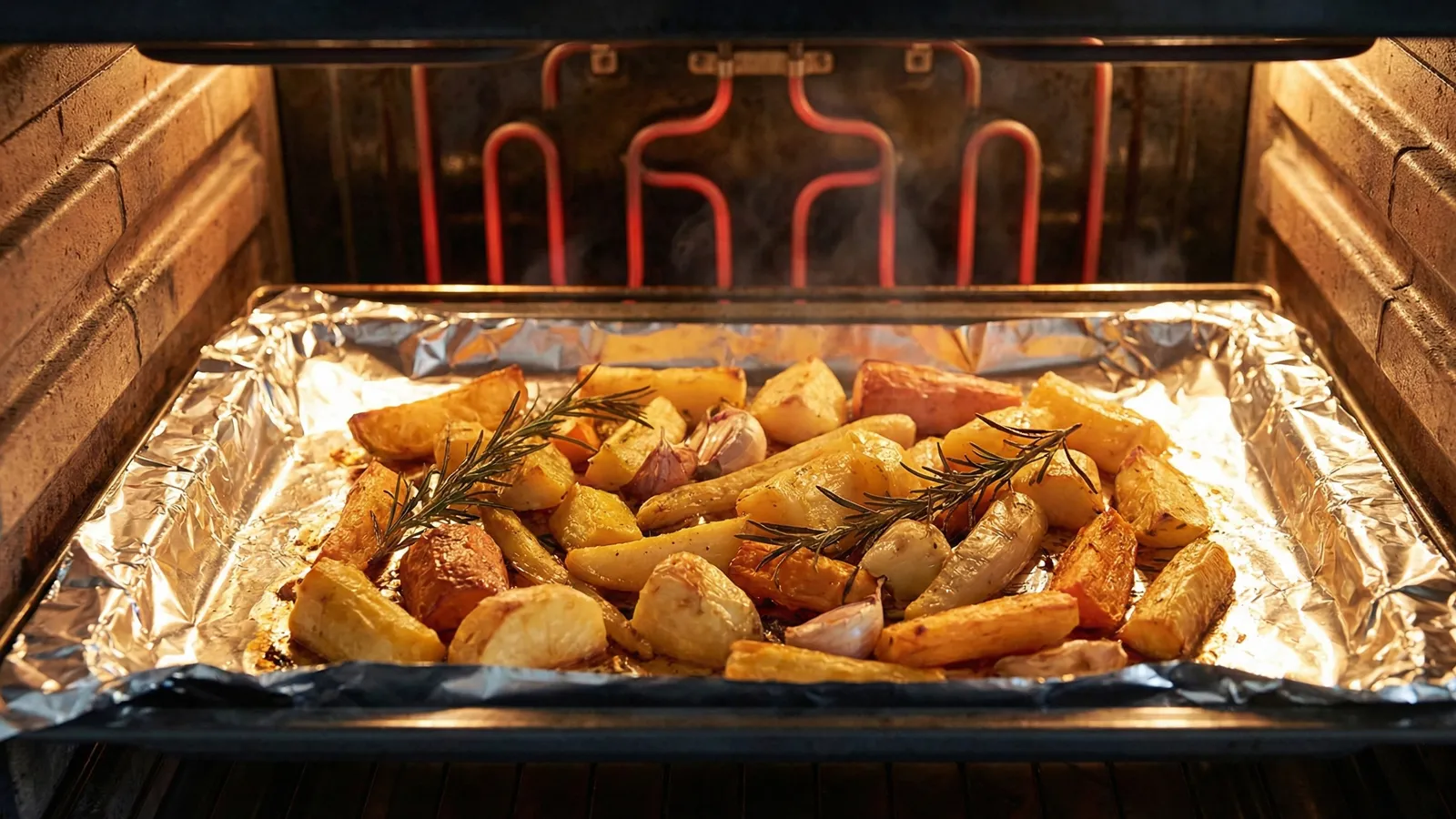
Your household oven typically maxes out at 260°C (500°F). This is far below the 660°C melting point. You can safely use foil to line trays or cover turkeys. It will reflect heat but will not combust.
On the Grill / Stovetop (Caution)
Gas Flames: A direct gas flame can reach over 1,000°C. If you put foil directly into the blue flame of a gas burner, it will not "catch fire" like paper, but it will melt and crumble instantly. You might see the edges char or glow—this is rapid oxidation, not burning.
Electric Coils: Never let foil touch the heating element of an electric stove. It can melt onto the coil, causing a permanent mess and potential electrical arcing.
In the Microwave (DANGER)
Never put foil in the microwave.
It won't "burn" in the chemical sense, but it will spark. Microwaves work by vibrating water molecules. Since aluminum has no water, the energy has nowhere to go. The thin edges of the foil build up electrical charge until it arcs (sparks). These sparks can ignite grease, paper towels, or even the microwave itself.
3. Is "Burnt" Foil Toxic?
If you leave a foil container in a campfire and it turns grey and brittle, have you released toxic fumes?
No. Unlike plastic (which releases toxic dioxins) or Teflon (which off-gasses at high heat), aluminum is just metal.
- No Fumes: Aluminum does not smoke. If you see smoke coming from your foil packet, it is the food, oil, or marinade burning, not the metal.
- Aluminum Oxide: If foil is heated to extreme temperatures, it breaks down into aluminum oxide powder. This is non-toxic (it is essentially the same material as sandpaper grit or rubies), though you wouldn't want to breathe the dust.
Summary
Aluminum is one of the safest materials for food packaging because it is effectively non-combustible in a kitchen environment.
- Melting Point: 660°C (Safe for all ovens).
- Fire Risk: Nearly zero (unless you are in a microwave).
This heat resistance is why aluminum foil containers are the preferred choice for catering and baking industries worldwide.