
Importing Machines from China: The Truth About Installation & After-Sales Service
The Elephant in the Room: "What if it breaks?"
Let's be honest. When you buy a printing machine or a paper cup line from China, your biggest fear isn't the price—it's what happens after the container arrives.
We've heard the horror stories from clients who switched to us: machines arriving with manuals in broken English, wires labeled in Chinese characters, and a sales rep who stops replying once the balance payment clears.
At Newtop Machinery, we don't just sell iron; we sell uptime. Over the last 20 years, we realized that "standard" service isn't enough. Here is exactly how we do installation and support differently to ensure you are never left with a giant paperweight.
1. The "Real" Factory Acceptance Test (FAT)
Most manufacturers run a machine for 15 minutes before packing it. That's not a test; that's a warm-up.
How We Do It:
We refuse to ship a machine until it has run continuously for 24 hours using your specific material (or the closest equivalent).
Case in Point: A client in Mexico needed to print on 40-micron shrink film. Standard testing uses 60-micron. We sourced the thinner film locally to test the tension control. We found a snapping issue at high speeds, fixed it by recalibrating the servo torque, and then shipped it. If we hadn't tested with reality in mind, that client would have faced weeks of downtime in Mexico.
2. The "Grandma-Proof" Wiring System
Electrical cabinets are often a nightmare for local technicians to troubleshoot. Schematics disappear, and wire numbers fade.
How We Do It:
We moved beyond simple numbering. We use a Color-Coded & QR Tagged System.
- Visual Matching: Every cable end and port is color-matched. Blue goes to Blue. Red goes to Red. No electrical degree required.
- Video Manuals: We stick QR codes on critical components (like the main servo drive). Scan it with your phone, and a 30-second video pops up showing exactly how to reset or replace it. No reading required.
3. Remote Installation: Zoom is Not Enough
Since 2020, travel costs have made flying engineers expensive. Remote installation is the new standard, but it fails if the communication is just text messages.
How We Do It:
We assign a dedicated "Installation Task Force" to you before the machine arrives. This isn't a sales rep; it's a senior mechanical engineer and an English-speaking project manager.
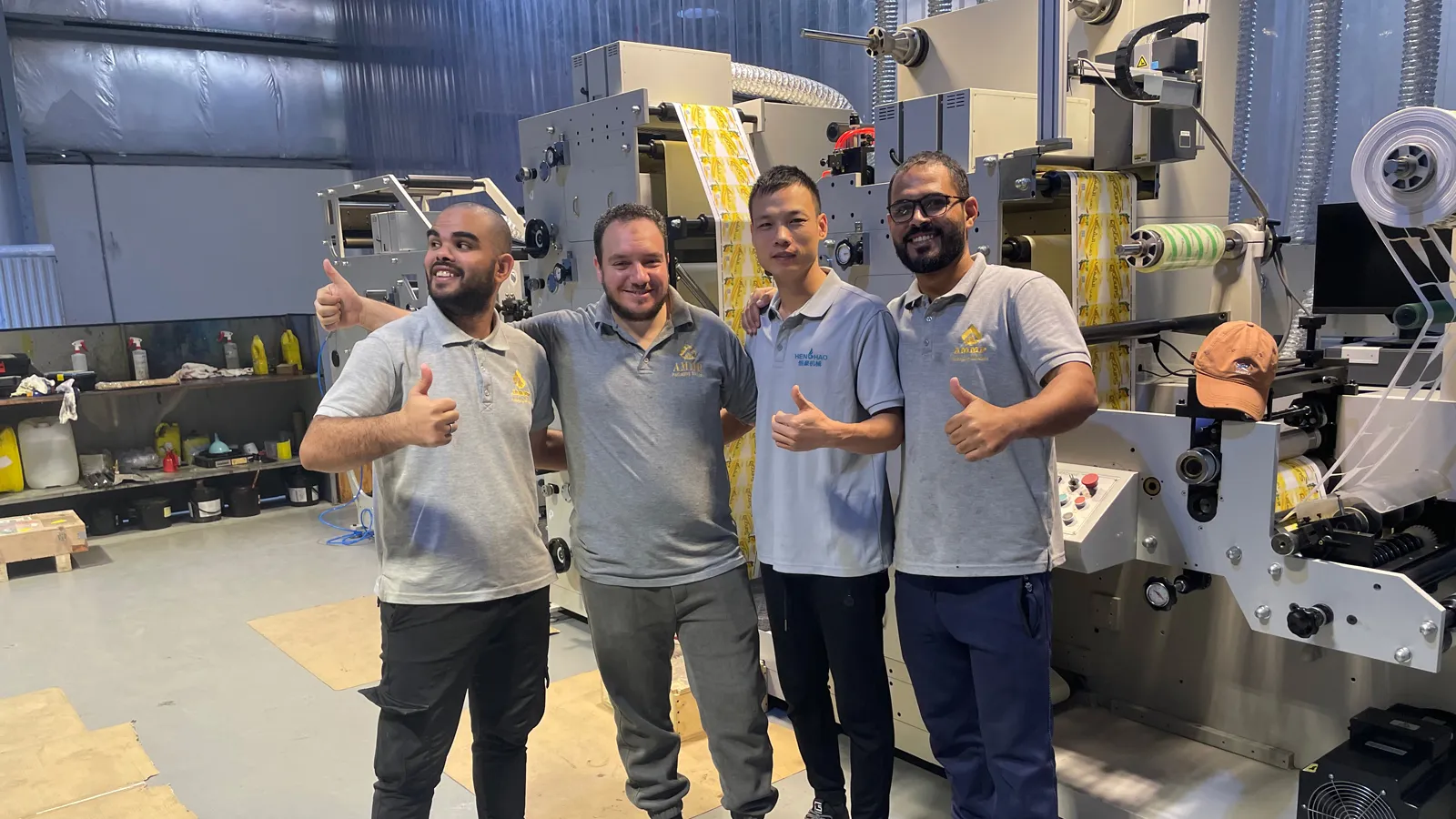
We utilize Augmented Reality (AR) Tools or simple annotated video calls. When you point your camera at a part, we draw circles and arrows on your screen in real-time to show you exactly which bolt to tighten. We successfully installed a complex 8-color flexo press in Brazil purely through this method, saving the client $5,000 in travel fees.
4. The "Spare Parts Strategy" (Unpopular Opinion)
Many suppliers try to lower the quote by removing spare parts. We don't do that.
Our Stance:
We force-include a "Critical Survival Kit" in every quote. This includes not just consumables, but the specific sensors, relays, and bearings that are most likely to fail after 2 years.
Why? Because waiting 5 days for a $20 sensor to arrive from China while your factory is idle costs you thousands. We would rather argue about the extra $200 upfront than have you lose $20,000 later. That is what true partnership looks like.
Conclusion: Support is a Feature, Not an Afterthought
Don't choose a supplier who just says "we have good service." Choose one who has a process for it.
At Newtop, our installation success rate is 99%, whether we are there in person or guiding you from Wenzhou. Ready to work with a team that has your back? Contact us today.